 Contact:025-89681552
 Email:leihl@nju.edu.cn
 Biography
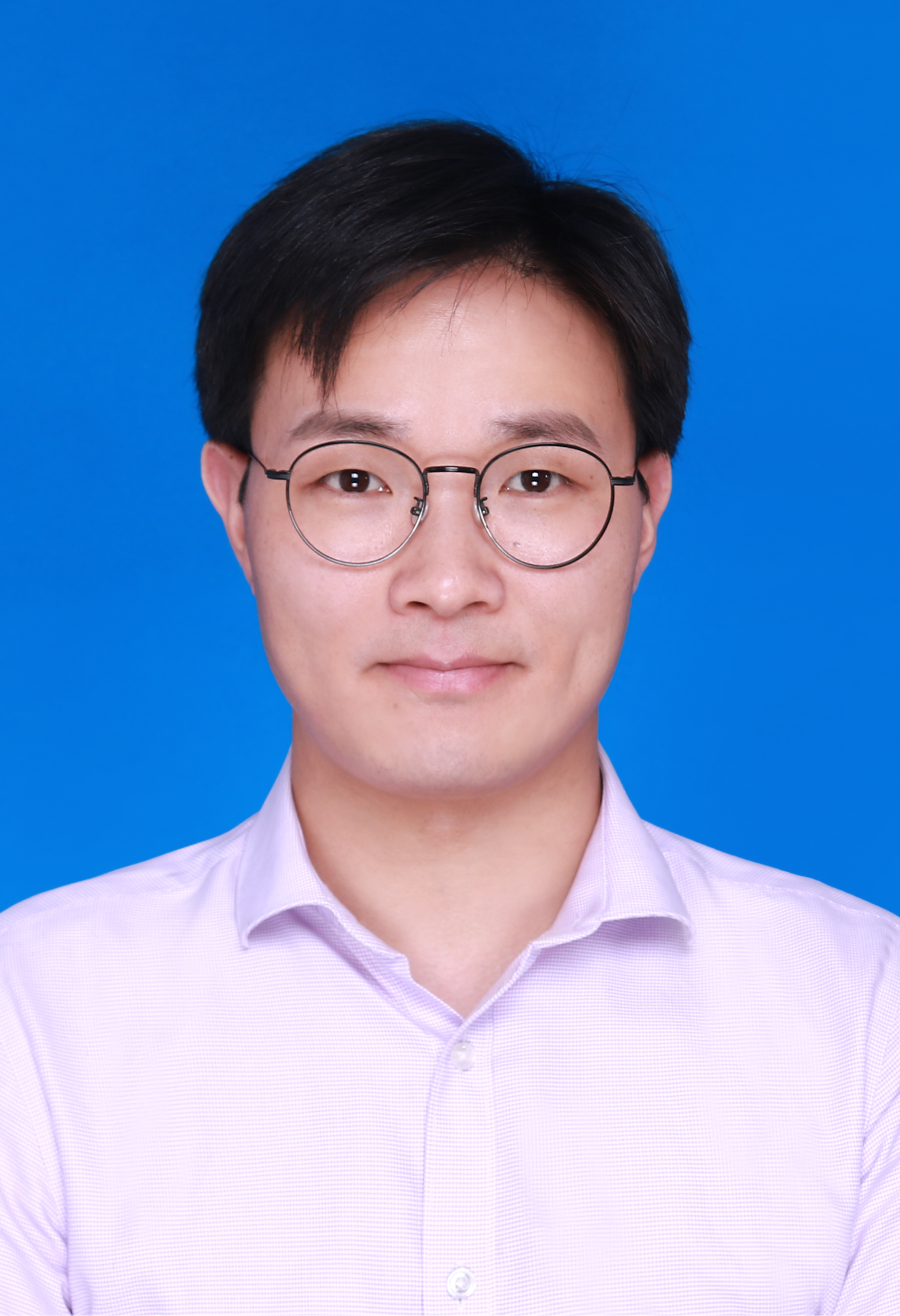
Lei Hanlun graduated with a Bachelor's degree in Astronomy from Nanjing University in June 2010. He obtained his Ph.D. in Astronomy from the School of Astronomy and Space Science, Nanjing University, in June 2015, specializing in Astrometry and Celestial Mechanics. Afterward, he remained at Nanjing University as an Assistant Researcher (full-time research position), and was promoted to Associate Professor in June 2018. He began supervising Master's students in 2019 and started supervising Ph.D. students in 2022. Between 2017 and 2018, he was a visiting scholar at the Department of Aerospace Engineering, University of Rome, funded by the China Scholarship Council. He was awarded the "Excellent Doctoral Dissertation of Nanjing University" in 2016 and the "Youth Excellent Teaching Award" by Nanjing University in 2022. He was also selected for the National-level Youth Talent Program in 2024. He authored the textbook Perturbation Methods and Theory (Volumes 1 and 2), to be published by Nanjing University Press in December 2024. His research interests include celestial mechanics, spacecraft orbital mechanics, and the thermophysical properties of small celestial bodies.
 Teaching
Classical Control Theory (Undergraduate)
Perturbation Methods and Theory (Undergraduate & Graduate)
Introduction to Modern Celestial Mechanics (Undergraduate & Graduate)
 Research Interests
I. Research Interests
Celestial Mechanics (Perturbation Theory):
Dynamics of small celestial bodies in the Solar System, Hamiltonian perturbation theory, resonance dynamics, Eccentric von Zeipel-Lidov-Kozai (ZLK) mechanism, the origin and evolution of planetary system obliquity, long-term dynamics (including long-term resonance), orbital-spin coupling dynamics and evolution in binary asteroid systems.Space Dynamics:
Space manifold transfer theory, dynamics of Lagrange points, Lagrange point mission orbital design, low-energy orbits, asteroid exploration (including the thermophysical properties of small bodies, non-gravitational effects, etc.), low-thrust orbital theory (optimal control), Earth-Moon space orbital theory, and interplanetary orbit optimization design.
II. Graduate Supervision
Huang Xiumin, Master’s student (2021), graduate in June 2024.
Awarded the Nanjing University Excellent Master’s Thesis Award.Zhao Shunjing, Master’s student (2022), Ph.D. student (2024).
Awarded the Nanjing University Excellent Undergraduate Thesis Award.Gao Hao, Master’s student (2024), Ph.D. student (2026).
Awarded the Nanjing University Excellent Undergraduate Thesis Award.Leng Xiaoyan, Master’s student (2025).
Li Wenbin, Master’s student (2025).
 Publications
https://www.researchgate.net/profile/Hanlun_Lei