
 Contact:+86-25-8968-0861
 Email:zzhang AT nju DOT edu DOT cn
 Biography
Zhi-Yu Zhang
Professor / Ph.D. Supervisor
School of Astronomy and Space Science, Nanjing University
Joined Nanjing University in May 2019
Research Interests
Prof. Zhang specializes in observational radio astronomy, physical properties of the interstellar medium, and galaxy evolution. Our group is dedicated to exploring "The Chemical Universe," focusing on cosmic element evolution and astrochemistry. We utilize world-class radio/sub-millimeter/optical/infrared telescopes, including ALMA, VLA, NOEMA, JCMT, FAST, GBT, IRAM 30m, and VLT, to observe molecular and atomic lines. Our research delves into galaxy evolution, star formation, the stellar initial mass function (IMF), element and isotope abundances, and astrochemistry. through these studies, we aim to address the following key scientific questions:
How are the various elements that make up our universe formed and evolved?
What drives star formation, the most crucial process for the cosmic baryon cycle?
What are the initial physical and chemical conditions of star-forming gas?
What physical laws govern star formation?
Do these laws change with the environment?
Curriculum Vitae
2019 - PresentNanjing University, School of Astronomy and Space Science, Professor
2014 - 2019University of Edinburgh (UK), Postdoctoral Researcher
2014 - 2019European Southern Observatory (ESO, Germany), Postdoctoral Fellow
2009 - 2014University of Chinese Academy of Sciences / Purple Mountain Observatory, Ph.D. in Science
2005 - 2009Purple Mountain Observatory, Chinese Academy of Sciences, M.Sc. in Science
1998 - 2003University of Science and Technology of China, Department of Modern Physics, B.Sc. in Science
 Teaching
Teaching
Dedicated to the cultivation of professional astronomers, emphasising the integration of fundamental knowledge with frontier research in teaching practice. Special emphasis is placed on cultivating students' Critical thinking, Reading skills, Academic writing proficiency, and Data analysis capabilities, guiding students from textbook knowledge to the frontiers of scientific exploration. You must challenge textbooks!
Courses
Interstellar Medium
(ISM)Undergraduate-Graduate Joint CoursePhysical processes, chemical evolution, and observational probes of the multi-phase interstellar medium (hot coronal gas, ionised gas, atomic gas, molecular gas, dust, cosmic rays, etc.). Co-taught with Prof. Ping Zhou.
Astronomical Literature
Reading and Writing
Undergraduate-Graduate Joint CourseEfficient retrieval and reading of professional English literature; systematic training in academic writing, logical structuring, scientific visualisation, peer review, and oral presentation.
 Research Interests
Research Topics
Galactic Chemical Evolution
How are chemical elements produced and distributed in galaxies over cosmic time? By combining observations with numerical models (such as GalCEM), we trace the enrichment history of elements (including isotopes), revealing the life cycle of matter from the Big Bang to the present day.
Multi-phase Interstellar Medium
The ISM consists of gas, dust, cosmic rays, etc., providing the fundamental environment for star formation. We measure the physical conditions of the multi-phase ISM to examine how temperature, density, and turbulence regulate the conversion of gas into stars.
Astrochemistry
The cold Universe is molecular. We study how chemical species evolve from simple to complex ones (such as C60, PAH) in gas, dust, and ice mantles, and identify unknown species in the cosmos.
Star Formation
Star formation drives the Baryonic cycle. We investigate the principles of forming stars from gas, defining dense gas and gravitationally-bound gas, and how feedback processes change their parental gas properties.
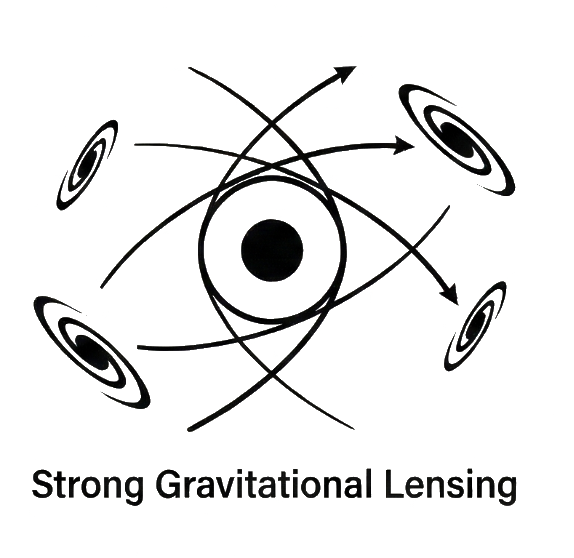
Strong Gravitational Lensing
Strong gravitational lensing provides amplification of flux and angular scales, offering a powerful tool to achieve very high resolutions and study the physical properties of background galaxies.
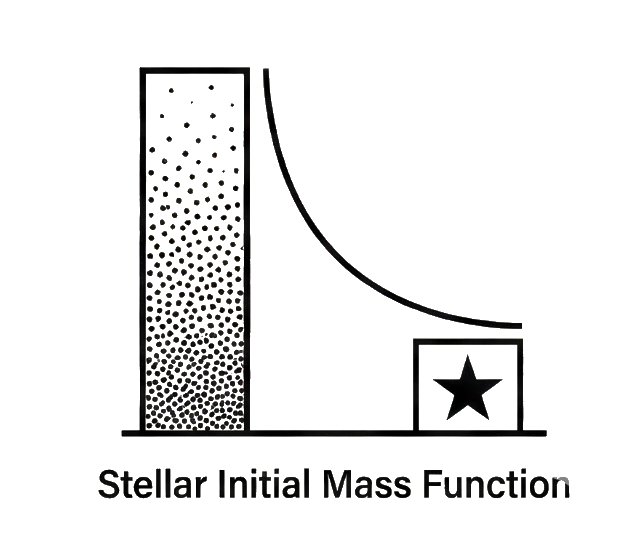
Stellar Initial Mass Function
The stellar IMF describes the mass distribution of a stellar population at birth. We research whether the IMF is universal for all galactic environments or varies with physical conditions.
 Publications
Selected Publications
Our group has made significant progress in the fields of ISM physics, Stellar Initial Mass Function (IMF), and galaxy evolution. Below are some selected highlights:
Outreach
We are committed to translating frontier astronomical discoveries into accessible scientific stories, exploring the mysteries of "The Chemical Universe."
http://www.thechemicaluniverse.space/